
MEDIA
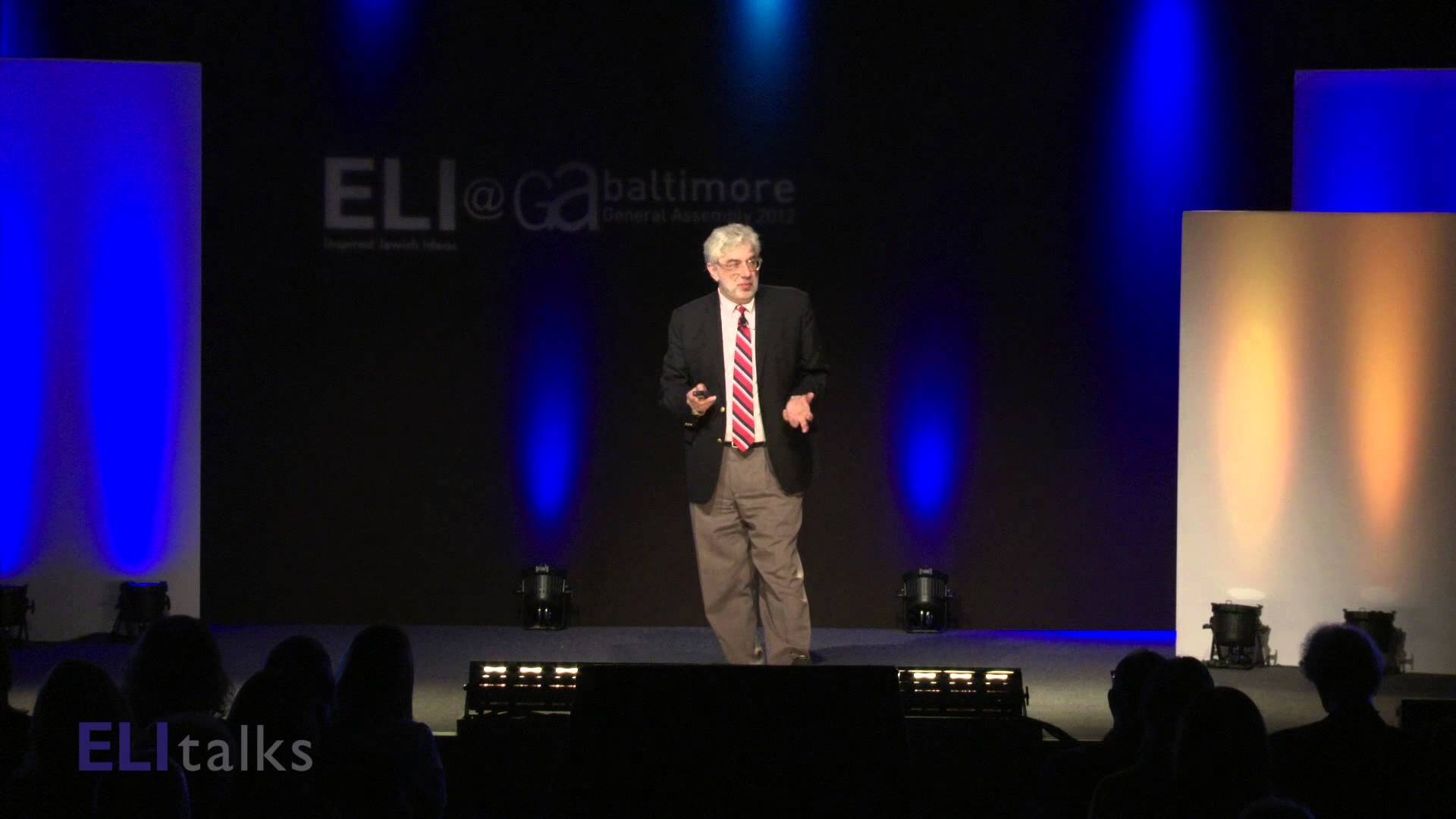
ELI TALKS AT THE GENERAL ASSEMBLY, BALTIMORE
Etiam porta sem malesuada magna mollis euismod. Aenean eu leo quam. Pellentesque ornare sem lacinia quam venenatis vestibulum.
ELI TALKS AT THE GENERAL ASSEMBLY, BALTIMORE
GENERAL ASSEMBLIES OF JFNA (FORMERLY UJC)
Misha was featured as a keynote speaker at a number of professional and volunteer conferences.
Reimagining Leadershi in Jewish Organizations: Ten Practical Lessons to Help You Implement Change and Achieve Your Goals
—Jewish Lights Publishing

"Bringing people together through their organizational affiliations and then asking them to think beyond those institutions to serve the community in the best possible way is one of the most important challenges we face today in a world of too many Jewish nonprofits. That takes strong leadership. Are you prepared for it?" ― from the Introduction
In today's increasingly demanding world, you need a practical way to improve current lay and professional leadership in Jewish community organizations. Dr. Misha Galperin draws on over thirty years of professional experience, as well as insights from the world of business, psychology and research in Jewish demographics and sociology, to help you see what is working and what is not. In a style that is informative, accessible and direct, he provides inspiring, action-oriented advice and examples that illustrate how these "lessons from the field" can help you cultivate strong, effective and transformative leadership that will help your organization achieve its goals.
"Provokes important and critical questions about Jewish leadership today.... Both inspiring and instructive."
―Natan Sharansky, chairman of the executive, The Jewish Agency
"Thoughtful, visionary and exceptional.... An important conversation around Jewish leadership."
―Marlene Post, former chair, Hadassah and Birthright Israel Foundation
"Eminently readable, extremely useful, with astute psychological insights into the motivation of professionals and staff.... A must-read for all Jewish leaders and those who aspire to that role."
―Elise Bernhard, president, National Foundation for Jewish Culture
THE CASE FOR JEWISH PEOPLEHOOD: CAN WE BE ONE? WITH DR. ERICA BROWN
—Jewish Lights Publishing

This call to Jewish community explores the purpose, possibilities, and limitations of peoplehood as a unifying concept of community for a people struggling profoundly with Jewish identity. It defines what peoplehood is―and is not―and explores both collective and personal Jewish identity and the nature of identity construction.
Drawing on history, sacred texts and contemporary scholarship, The Case for Jewish Peoplehood identifies some of the obstacles that challenge a shared notion of peoplehood: personal choices, the construct of membership and boundaries, the growth of Jewish illiteracy, identity fragmentation between Israeli and Diaspora Jewry, and the generational divide affecting traditionalists, baby boomers, and generations X and Y.
To help you join the conversation, the authors support a vision for the future and provide practical guidance and recommendations for getting there.
"Accessible and stimulating. Opens the windows and doors wide to invite all of us to participate in a spirited conversation about the changing nature of Jewish peoplehood in the twenty-first century."
―Shifra Bronznick, co-author, Leveling the Playing Field: Advancing Women in Jewish Organizational Life; founder and president, Advancing Women Professionals and the Jewish Community
“Effectively combines a broad review of the Jewish peoplehood concept with a nuanced understanding of how Jews live their lives. The authors take a conceptual framework with its origins in the works of Kaplan to a new plane, understanding that at a time of unlimited choices and unprecedented freedom, Jewish peoplehood takes on a myriad of meanings, while guided by unified values and powerful inspiration.”
―Dr. Jeffrey Solomon, president, Andrea and Charles Bronfman Philanthropies
“As the issue of Jewish peoplehood assumes greater urgency, Drs. Misha Galperin and Erica Brown have provided us with a rich resource. A must-read for all concerned about the Jewish future.”
―Dr. John Ruskay, executive vice president and chief executive officer, UJA-Federation of New York
MOURNING AND MEMORY
Why is Tisha B’Av, you may wonder, important to a secular Russian Jew? I grew up with little knowledge of major Jewish holidays, let alone an obscure Jewish fast day observe mostly by the Orthodox today. It is a reasonable question. It has a reasonable answer.
Read more…
WE”RE NOT LOST
Yehuda Kurtzer’s important and provocative essay, “Leadership and Change in the Land of the Lost” demands a conversation. It is the conversation of the hour, and, as he notes, many have already begun this important talk. As the CEOs of many large and well-established Jewish nonprofits near retirement, the question of who will succeed them is fraught with tension. We are not our grandparents or our parents. Our organizations must evolve and maintain relevance. The leaders of these organizations must do the same. Who will lead us next?
Read more…

FUNDING PEOPLEHOOD
What happens when an idea is really important and needs our full financial support, but just isn’t sexy? Many philanthropies face this funding question every day. It’s a lot easier to get someone to pay for an ambulance than to pay for salary raises for medics. It’s a lot easier to get people to pay for a room in a building than to cover the cost of doing business. But what happens if we ignore medic salaries or the cost of rent and utilities? These expenses do not go away. Peoplehood is not sexy. But funding a peoplehood agenda is becoming increasingly urgent in the Jewish community today.
Read more…

REPLACE THE WORD, BUT KEEP THE ‘PEOPLEHOOD’ CONCEPT
When I first co-authored a book on “peoplehood,” I was hoping that it would precipitate conversations on what it means to be a people. I hoped we would talk about what constitutes Jewish identity in a modern age and what we can do to bring people together with diverse Jewish commitments. It was an ambitious goal but not an impossible one.
Recently, some of that conversation has finally taken place in Jewish newspapers and across cyberspace. But why, I keep asking myself and others, has it taken so long to get people to talk about one of the most urgent issues facing our Jewish future?
Read more…

PUT RUSSIAN-SPEAKING JEWS ON THE COMMUNITY’S RADAR
NEW YORK (JTA) — With the contemporary music world buzzing about Regina Spektor’s upcoming album more than a month before its release, I cannot help but think about the young musician’s rise in the context of Russian-speaking Jewry. Spektor, who came to the United States with her parents when she was a young girl, still identifies deeply with the Russian-speaking Jewish community and has been an outspoken defender of Israel. And she is not an exception.
Read more…

JEWISH GYMNAST ALY RAISMAN AND THE FUTURE OF JEWISH IDENTITY
You don’t have to be a sports fan, to appreciate the Olympics. Every four years, we are treated to two-weeks of the epic, heart-stopping dramas acted out by athletes, most of whom have given everything imaginable to be there, and who probably won’t strike it rich. But this year, it was a little harder for me to work up the excitement. Not only did the Israelis return without a single medal, but The International Olympic Committee turned a cold shoulder to the memory of the Munich 11. For many of us, it took a teenager from Boston performing a floor exercise to Hava Nagila, to pierce our veil of ambivalence.
Read more…
LEADERSHIP
Failure of Leadership on Child Sex Abuse– On a recent Sunday morning, I glanced at my newspaper and had another “cringe” moment. The story on the front page of The New York Times, like the Sholom Rubashkin, Bernie Madoff and Baruch Goldstein stories before it, exposed an underworld of evil with Jews at the center.
Leading with Force- ...If we approach leadership with intentionality, we pick our responses and we make our decisions, hoping that we retain some element of inner consistency. In its best sense, when leaders understand they are measured by their followers, they understand how to use power and influence for the best ends. They understand that since we are more rationalizing than rational beings that we must use our authority delicately and to good purpose.
Leading for Innovation – When I was a student at Yeshiva University, I learned a great deal about Judaism, having been deprived of the richness of a Jewish education in the FSU. I don’t really know why they took me....
Heroic Leadership- ...I will never forget one of the leadership exercises they did with us. They asked us various questions to draw attention to our cultural differences despite our strong ethnic or religious similarities. One of the questions was to name a personal Jewish hero. Many of the Israelis put David Ben Gurion in the top seat, often followed by Menahem Begin or Yoni Netanyahu – the hero of Entebbe. Many of my American colleagues said Sandy Koufax.
PHILANTHROPY
A Big Todah: The Power of Collective Giving- If you are like me, you are anxious about the situation in Israel. You realize how vulnerable we are right now. A cease-fire may be no more than a chance to re-fuel, re-load and re-energize the forces at work against us. We are unsure what the days and weeks ahead will bring or what it will require of the global Jewish community in support. But anxiety has a cost; it can get in the way of gratitude.
Notes for the Board of Governor's Meeting- I just came back from the Jewish Agency Board of Governors’ meeting in Jerusalem. Such meetings are held only three times a year, bringing together professionals and 120 board members from all around the world.
A Nimble International Organization - Someone recently asked me how the Jewish Agency could take on a new mission when it is a relatively old organization. Why change something that is working? I responded that our task as Jews has always been to evolve as a people while holding on to an enduring sense of purpose. And I believe that the Jewish Agency is doing just that, evolving to meet the needs of a fast-paced, changing world while affirming its commitment to an enduring vision. I see no contradiction in that, only growth and passion. It is a gift to be a part of a people 4000 years old that created a new state in the twentieth century, one that has been at the cusp of scientific discovery and technological advancements. The combination of old and new keeps us anchored and helps us strive.
INTERNATIONAL GIVING

A Note from Berlin – I write to you from Berlin, from a very emotional place. I was just at the Gleinecker Bridge with my friend and colleague, Natan Sharansky, Chairman of the Jewish Agency for Israel. Gleinecker was the bridge to a new life for Natan and the site from where he finally left behind the Soviet authorities and crossed over to freedom. The road ahead would eventually take him to Jerusalem and to a new life with Avital and to the role of an international hero for the Jewish people.
A View from Eastern Europe - Greetings from St. Petersburg. Think of this as my postcard to you. I have been in my new role with the Jewish Agency for Israel for only a couple of weeks and have traveled throughout Israel and Eastern Europe with federation missions on a whirlwind of Jewish identity. Now I am on a White Nights Mission with a wonderful group of New York and Washington, D.C. leaders who are learning about Jewish life behind what was once the Iron Curtain.
Responding to Fire - ...Tragedies like these tend to bring out the best in people. Not only have emergency relief funds been pouring into Israel, but some of Israel’s harshest critics in these past months have sent aid and assistance. Israel has always been there for other countries in their time of need – from teaching irrigation techniques in Africa to urgent medical care in Haiti – and now that goodwill is being reciprocated.
The Jews of Germany – Life in Germany is different now. Far from “it will be bad for you,” the German-Jewish community is fast–growing, multilingual, and vibrant. I recently met with a group of young couples in Munich who have a "trialogue" with Israelis from Holon and couples from Brooklyn. The German group had a German native, an American, a Brazilian, Israelis, a Czech, a Slovak, a South African, as well as Azeri and Ukrainian immigrants.